
Chemical Processing Equipment in Modern Industry
Chemicals are vital to everyday life. They’re found in the fertilizers that feed our crops, the soaps and sanitizers that protect public health, the fuels that power industrial facilities, and the materials used to construct our homes and workplaces.
Chemical and petrochemical manufacturing underpins nearly every sector of the U.S. economy. In the United States, the chemical industry supports roughly 25% of GDP. [1]
Its influence is so widespread that, according to the U.S. Department of Energy, chemicals and petrochemicals account for roughly 40% of all industrial energy use and emissions in the U.S. [2]
Many of the substances handled in chemical and petrochemical facilities are toxic, flammable, explosive, and highly corrosive, and often processed under extreme heat and pressure. These conditions significantly increase the risk of equipment failure, which can compromise yield, endanger workers, and cause lasting environmental damage.
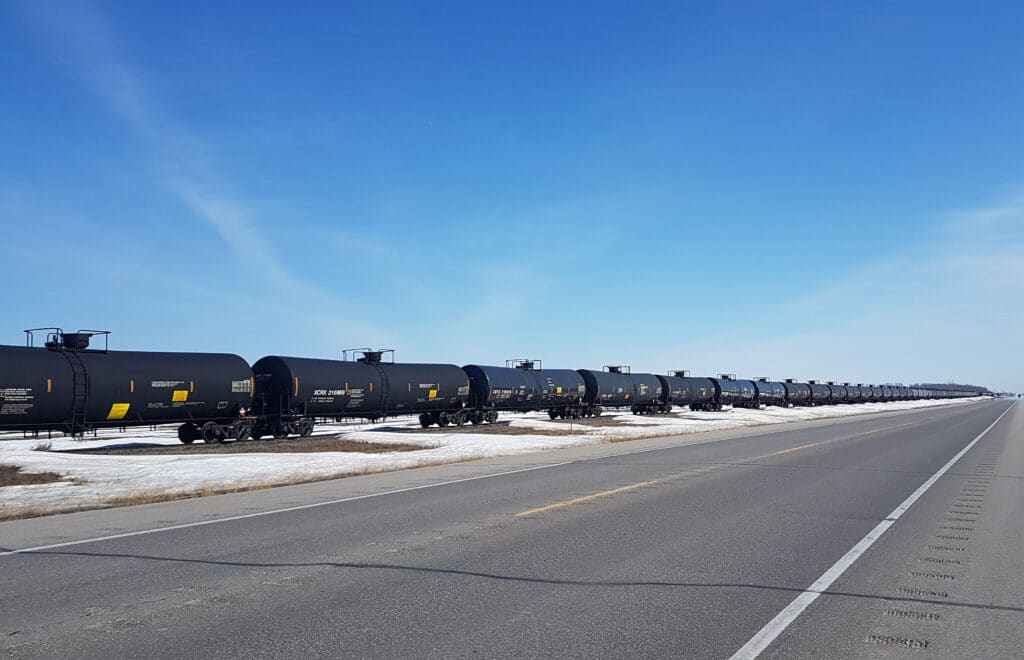
Because of these risks, chemical plants operate under strict oversight from agencies such as the EPA and OSHA, where even minor leaks are subject to measurement, reporting, and potential penalties.
Without durable, reliable chemical processing equipment, a facility’s operations, safety, and reputation are on the line. Chemical transfer hoses made of metal are engineered to withstand—and excel in—in the most demanding industrial environments.
Why Metal Hoses Are Ideal for Chemical Handling
Crafted from stainless steel and special alloys, flexible metal hoses offer exceptional corrosion resistance and long-term durability. They won’t crack, swell, or weaken as easily when exposed to solvents or acids. This stability is paramount in situations where aggressive chemicals are constantly mixed, stored, and moved.
Metal chemical transfer hoses are engineered to handle high pressures and rapid temperature fluctuations without collapsing, igniting, or bursting—critical safeguards in high-risk process environments.
Their firm, leak-tight construction doesn’t compromise their flexibility or capacity to absorb movement and vibration. As a result, flexible metal hoses are especially well-suited for safely transferring materials between containers, trucks, railcars, and barges.
Performance Advantages of Metal Hose in Chemical Processing Equipment
While non-metallic hoses, such as those made from Teflon (PTFE), may be suitable for certain uses, they lack the durability and reliability that metal hoses provide.
The key concern—beyond increasing PFAS regulation—is that Teflon and other polymer-based hoses are permeable, allowing small amounts of media to gradually escape through the hose wall. Over time and with repeated use, their porosity can lead to leaks that leach chemicals into the atmosphere and surrounding environment. Metal hoses, by contrast, are inherently non-porous. They prevent both the escape of hazardous media and the ingress of contaminants, eliminating these safety and environmental risks.
In the chemical industry, heat is often unavoidable. Many chemical reactions generate significant thermal energy even without the use of external heat sources. While rubber and plastic hoses decompose and degrade quickly above a certain threshold, metals retain their strength better as temperatures rise. The 300 series austenitic stainless steels offer an operating temperature range that far exceeds rubber, plastic, and composite hose materials.

Corrosive flow media is another defining feature of chemical manufacturing processes. Thanks to the inclusion of chromium and other alloying elements, metal hose offers excellent corrosion resistance across a wide range of chemicals. In many applications, metal hoses simply last longer because they resist chemical attack more effectively than hoses made from other materials.
This concept of “lasting longer” refers to material wear over time. Corrosion is the gradual deterioration of a material. The more corrosion-resistant the material, the slower that deterioration, and the longer the service life.
Beyond corrosion, shelf life is another limitation for rubber and plastic hoses. These materials break down over time, even in storage. The result is shorter service life and more frequent replacement cycles. The result is a shorter usable life and more frequent replacement cycles.
How Penflex Supports Chemical & Petrochemical Applications
Chemical handling incurs countless risks that can compromise both worker safety and the health of the environment. Penflex designs metal hoses with safety, reliability, and long-term performance as primary engineering objectives.
Materials: Penflex offers a wide selection of corrosion resistant materials and heavy-walled hoses designed to handle aggressive media. Our in-stock options, including 316L, 321, Inconel 625, Hastelloy C-276, and Monel 400, are ready for immediate delivery to support your operational demands. Additional alloys are available upon request.
Corrosion resistance: Our hoses are built with heavier wall thicknesses to withstand the harsh demands of chemical and petrochemical processing. Many chemicals have high penetration rates that can corrode or erode less robust materials, an important consideration in hazardous materials management. Thinner-walled hoses, while ideal for certain applications, can fail prematurely when transferring harsh chemicals, leading to frequent replacements.
Size range: From ¼” to 24”, Penflex’s flexible metal hoses come in a range of sizes that can be seamlessly integrated into any configuration or space.
High temperature properties: With a maximum service temperature of 1500°F, the 300 series stainless steels are engineered to maintain their strength as temperatures rise better than other materials of hose construction. For higher temperature applications, Penflex’s 625 Series made with Inconel 625 may be an appropriate solution.
Pressure ratings: When metal hoses are pressurized, the hose material naturally expands. The braid functions like a restraining cage, preventing the hose from elongating or swelling and enabling it to operate safely under harsh conditions. Depending on the size and hose series, expect pressure ratings up to 5,000 PSI.
Quality welds: High-quality welds are essential to hose integrity and long-term performance, especially for chemical processing equipment. At Penflex, we achieve this through a proven process that includes TIG welding and argon purging, which together produce clean, strong welds without compromising corrosion resistance. Our team includes ASME Section IX–certified welders, on-site certified welding instructors, and non-destructive examination (NDE) specialists, ensuring every assembly is tested and leak-tight before it leaves our facility.
Leak Testing: While all chemical transfer hoses are subject to our standard leak testing process, we do offer other, more acute leak testing methods. For instance, chlorine transfer hoses are tested to a maximum leak rate of 5 x 10⁻⁶ at two times MAWP using a helium mass spectrometer. (Due to permeability, PTFE hoses cannot be tested using helium mass spectrometry.)
Penflex routinely designs and manufactures hoses for specific chemical handling applications.
Ammonia Transfer and Stainless Steel Compatibility
Ammonia is one of the most widely used chemicals. The gas is used in crop production, commercial refrigeration systems, household cooling, and as a hydrogen fuel source. However, it poses serious health risks, which is why the transfer of ammonia is subject to stringent specifications established by both government agencies and industry associations.
Ammonia corrodes copper and zinc alloys and can quickly degrade rubber and certain plastics. That’s why metal hoses, durable and compatible with ammonia, are the preferred solution for safe transfer.
Chlorine Transfer Hoses
A key piece of chemical plant equipment, chlorine transfer hoses are highly-specialized metal hoses designed to transfer chlorine gas and liquid chlorine. Both are extremely hazardous and corrosive substances.
Our transfer hoses provide leak-tight, corrosion-resistant connections, ensuring the safe and smooth transfer of chlorine between fixed piping systems and railcars, tank trucks, storage tanks, and containers. Penflex’s Monel and Hastelloy chlorine transfer hoses fully comply with The Chlorine Institute Pamphlet 6 and are commonly used for loading and unloading operations.
Molten Sulfur and Sulfuric Acid Applications
Sulfur is most often created during natural gas and petroleum refining, however, the chemical element also plays an important role in agriculture, renewable energy, food preservation and production, sugar refining, and winemaking.
In most sulfur applications, Penflex’s 300 series offers sufficient corrosion resistance. When handling more aggressive sulfur media with higher penetration rates, such as saturated sodium hydrogen carbonate, sulfur chloride, sulfuric acid, our specialized hoses, Hastelloy C-276 and Inconel 625 offer significantly greater corrosion resistance and long-term durability.
When you need to maintain media at elevated temperatures as is the case with molten sulfur, steam jacketed hoses, essentially a hose within a hose, should be used. With these hoses, steam or other temperature-controlled fluids run through the outer hose to keep the flow media inside at the desired temperature.
Recommended Products for Chemical Handling
P4 Series
General purpose industrial hose used for many chemical applications.
776 Hastelloy
For the most aggressive chemical applications like chlorine transfer, Hastelloy C-276 may be the best alloy for the job.
1400 Series
Penflex’s most robust design, 1400 Series, features our thickest wall construction and 3 or 4 braid layers for the highest pressure applications.
How Penflex Supports OEMs, EPCs, and Chemical Plant Maintenance Teams
Chemical plants and equipment OEMs rely on suppliers who understand hazardous chemical service and the documentation that comes with it. We work with OEM engineering teams, EPC firms, and chemical plant maintenance groups to align flexible connection designs with process conditions, safety requirements, and routing constraints. Our customers count on us not only for a quality product, but also for expertise, responsive service, and resources to help them get the most out of their investment.
Dedicated Engineering Support
Our sales engineers work closely with you from project prototype through delivery, helping define requirements for new chemical processing equipment and replacements. A dedicated account manager means you have a single point of contact who understands your business and responds quickly with thoughtful solutions.
Practical Technical Resources
From online calculators and engineering bulletins to in-person and virtual training, we give your team the tools to make informed decisions and the confidence to install, operate, and maintain chemical handling hoses for maximum longevity.
Full Quality Documentation
On request, we provide complete record packs—including material test reports, leak and pressure test results, and cleaning procedure documentation—so you can meet compliance requirements and maintain full traceability.
Our commitment to service is reflected in our 99% customer retention rate and an average customer relationship of 20 years. We aim to make every interaction count, combining technical know-how with the kind of service that turns first-time buyers into long-time partners.
Footnotes
[1] ICF. U.S. oil and gas infrastructure investment through 2035. Retrieved November 17, 2025 from https://www.icf.com/insights/energy/us-oil-and-gas-infrastructure-investment-through-2035.
[2]U.S. Department of Energy. Chemical and Petrochemical Manufacturing. Retrieved November 17, 2025 from https://www.energy.gov/eere/iedo/chemical-and-petrochemical-manufacturing.