
This page focuses on metal hose assemblies within industrial and commercial HVAC system design. For information on HVAC applications within data centers and semiconductor fabs specifically, visit the respective industry pages.
Heating, ventilation, and air conditioning (HVAC) systems play a crucial role in maintaining safe, reliable indoor environments across offices, hospitals, manufacturing facilities, and other commercial and industrial buildings. They remove pollutants and allergens from the air, regulate temperature and humidity, and prevent the growth of harmful spores and microbes.
The piping and hose components within these systems must withstand elevated temperatures and pressures, accommodate movement and vibration, and resist degradation from corrosive flow media.
The U.S. HVAC market is projected to grow from $31.3 billion in 2024 to $38.45 billion by 2030. [1]
The HVAC industry is being propelled by a surge in new construction and by tightening energy efficiency and environmental standards that are accelerating the shift to next-generation technologies. As critical components within commercial and industrial HVAC systems, metal hoses play an essential role in helping operators achieve performance, reliability, and sustainability goals.
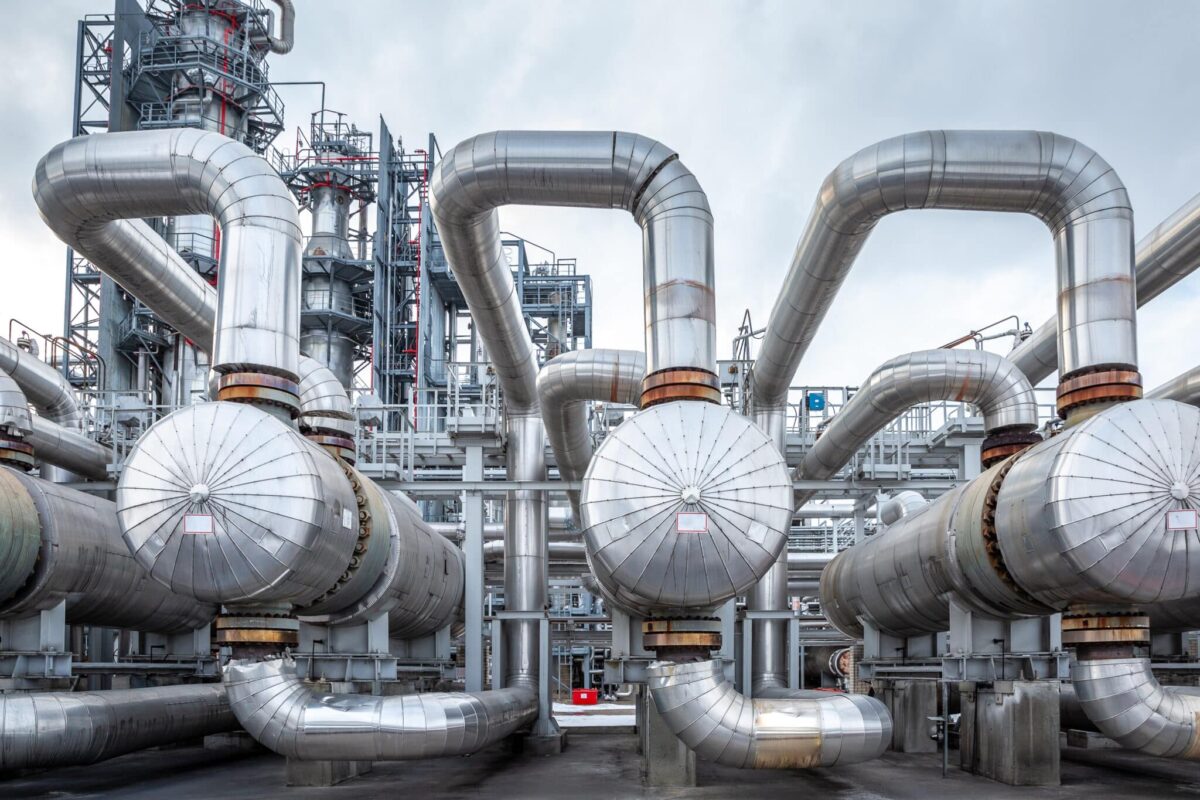
Flexible Connections in Commercial and Industrial HVAC System Design
Beyond their ability to absorb movement and resist corrosion, metal hoses offer a level of durability HVAC system owners may be hard-pressed to find among the alternatives.
These components are designed to accommodate movements associated with HVAC systems, whether stress stems from thermal expansion throughout the day, seismic activity, or vibrations caused by pump start-up and shutdown. By acting as a sink for system stress, metal hoses protect more expensive—and harder-to-replace—pipe and equipment.
While refrigerants have unique corrosion profiles, water remains the most common contributor to corrosion-related HVAC failures. Water and steam are rarely just H2O; they inevitably collect other substances, like chlorides, that can be highly corrosive. Stainless steel hoses generally offer better resistance to wear than hoses made from non-metallic materials.
The welded construction of a metal hose assembly further enhances integrity. Unlike rubber connectors that rely on clamped or crimped ends and often require frequent replacement due to aging and material degradation, metal hoses deliver reliable performance over a long service life.
Flexible metal hose is commonly specified in commercial and industrial HVAC system design for applications that must accommodate movement, vibration, or elevated temperatures.
- Refrigerant transfer lines: Industrial and commercial HVAC system design relies on a network of flexible metal hoses to transport liquid cooling media to key components.
- V loops and U loops: V and U loops are designed to effectively absorb movement caused by thermal expansion, contraction, and seismic activity without taking up a lot of space.
- Expansion joints: When hose isn’t the right solution for an HVAC application, whether due to excessive movements or space limitations, we can provide custom expansion joints designed to meet specific application requirements.
- Pump connectors: All HVAC systems generate movement and vibration, placing stress on piping systems, especially those transporting water to upper floors in high-rise buildings. To help minimize these forces, Penflex offers threaded and flanged pump connectors, designed to absorb vibration and reduce strain on the system.
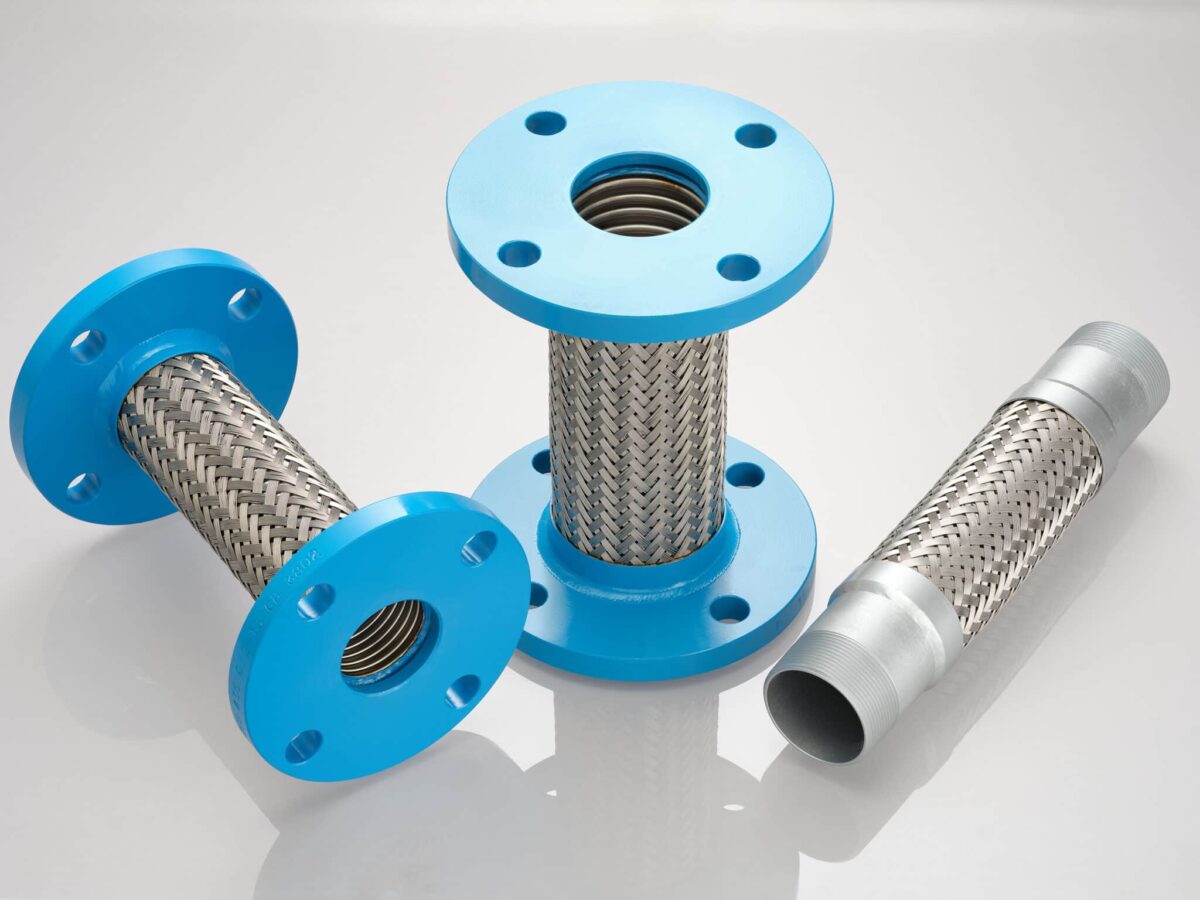
Why is Metal is Preferred in HVAC Systems
Moisture, heat, and chlorides are constant factors in HVAC environments—conditions that quickly degrade rubber and plastic hoses. Stainless steel and bronze, by contrast, offer excellent corrosion resistance, maintaining their integrity even in systems exposed to condensate or chemically treated water.
Users can also expect longer service life from metal hoses. All non-metallic materials break down over time, even when not in service. Rubber and synthetic hoses harden, crack, or lose flexibility with age, and require periodic replacement. Metal hoses, on the other hand, do not deteriorate in storage and, if installed properly and operating within design parameters, they deliver consistent performance over years of use. Longer life in service translates to a reduction in maintenance costs and system downtime.
How Penflex Supports HVAC Operations
Increased flexibility: HVAC systems are often built into confined or irregular spaces. Penflex offers lightweight, compressed pitch hose for easy installation in cramped spaces.
Corrosion resistance: All hoses are prone to deterioration if they’re continuously exposed to harsh substances and intense heat or pressures, but our austenitic stainless steel hoses have superior corrosion resistance. For non-copper piping systems, our 316L and 321 stainless steel hoses offer excellent resistance to chlorides and other corrosive chemicals commonly found in HVAC systems.
Alloy selection: Matching the hose alloy to the piping system material is essential for compatibility and long-term corrosion protection, and must be addressed as part of an overall HVAC corrosion protection strategy. In HVAC systems using copper piping, bronze hoses are the appropriate choice. With a broad product range that includes bronze hose, Penflex makes it easy to ensure proper material alignment across your HVAC system.
Size range: From ¼” to 24”, Penflex’s flexible metal hose for HVAC comes in a range of sizes that can be seamlessly integrated into any configuration or space.
High pressure ratings: When corrugated hoses are pressurized, the material expands. Braid functions like a restraining cage, preventing the hose from elongating or swelling and, thus, acts as the pressure carrier. Depending on size, wall thickness, and hose series, Penflex hoses can reach working pressures up to 5,000 PSI.
High operating temperatures: While stainless steels can withstand temperatures up to 1,500°F, their practical limit in most applications is 1,000°F.
HVAC systems operate well within this range, but the key takeaway is that metal hoses retain their strength far better than non-metallic alternatives as temperatures rise, an important consideration for systems with higher pressure requirements or potential pressure spikes.
Quality welds: High-quality welds are essential to hose integrity and long-term performance, especially commercial and industrial HVAC systems. At Penflex, we achieve this through a proven process that includes TIG welding and argon purging, which together produce clean, strong welds without compromising corrosion resistance. Our team includes ASME Section IX–certified welders, on-site certified welding instructors, and non-destructive examination (NDE) specialists, ensuring every assembly is tested and leak-tight before it leaves our facility.
Recommended Products for HVAC Applications
M-100
Heavy-duty interlocked hose for safety relief valve vent connections.
P5 Series
Large diameter hose options for commercial HVAC applications.
794 Bronze
Corrosion-resistant bronze hose designed for seamless integration with copper piping systems.
How We Support Mechanical Contractors, OEMs, and Facility Operators
At Penflex, we view every order as an opportunity to build long-term partnerships with mechanical contractors, OEMs, and facility operators. Our customers count on us not only for a quality product, but also for expertise, responsive service, and resources to help them get the most out of their investment.
Dedicated Engineering Support
Our sales engineers work closely with you from project prototype through delivery, helping define requirements for new products and replacements. A dedicated account manager means you have a single point of contact who understands your business and responds quickly with thoughtful solutions.
Practical Technical Resources
From online calculators and engineering bulletins to in-person and virtual training, we give your team the tools to make informed decisions and the confidence to install, operate, and maintain hoses for maximum longevity.
Full Quality Documentation
On request, we provide complete record packs—including material test reports, leak and pressure test results, and cleaning procedure documentation—so you can meet compliance requirements and maintain full traceability.
Our commitment to service is reflected in our 99% customer retention rate and an average customer relationship of 20 years. We aim to make every interaction count, combining technical know-how with the kind of service that turns first-time buyers into long-time partners.
Footnotes
[1] Air Conditioning Contractors of America. HVAC is heating up. Retrieved November 17, 2025 from https://www.acca.org/hvac-industry-growth.