
The United States is home to more than 16,000 wastewater treatment facilities and over 152,000 public water systems.[1] Two million miles of drinking water piping and hundreds of thousands of miles of sewer lines support the collection, treatment, and distribution of water nationwide. Much of this infrastructure was built decades ago.
As the population continues to grow, demands on water and wastewater infrastructure are increasing. Water-intensive industries such as data centers and semiconductor manufacturing are expanding, placing additional strain on existing systems. At the same time, evolving regulations related to nutrient removal, disinfection byproducts, and emerging contaminants are adding complexity to system design.
Meeting today’s realities with an aging infrastructure calls for upgrades, expansions, and new construction, often with the support of government funding. Municipal utilities, regional authorities, and private or industrial operators are prioritizing long-term reliability. For projects receiving federal and state funding, domestic sourcing requirements, such as American Iron & Steel (AIS), also play a critical role in procurement decisions.
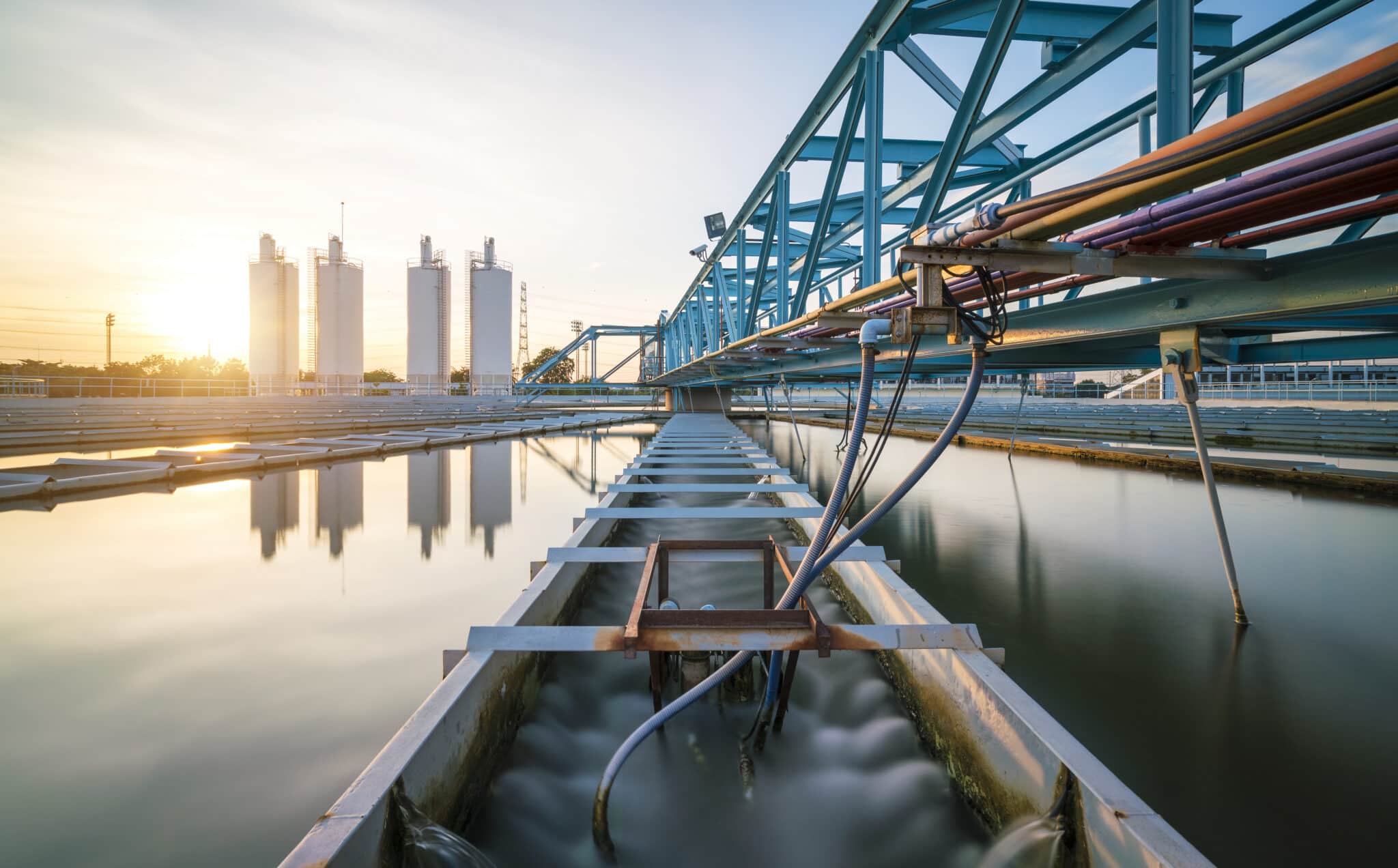
Flexible Connections in Water and Wastewater Infrastructure
Beyond their ability to absorb movement and resist corrosion, metal hoses offer a level of durability that is difficult to match with alternative materials in water and wastewater systems.
These components are designed to accommodate movement, whether stress stems from thermal expansion throughout the day, unpredictable seismic activity, or vibrations caused by pump start-up and shutdown. By absorbing system stress, metal hoses help protect more expensive—and harder-to-replace—hard pipe and equipment.
While all hoses are prone to deterioration if they’re continuously exposed to harsh substances, stainless steel offers superior corrosion resistance across a broad range of treatment chemicals. The welded construction of a metal hose assembly further enhances integrity and supports longer service life in demanding environments.
Metal hose is commonly specified in water and wastewater systems when there is a need to accommodate movement in, oftentimes, corrosive applications.
- Pump connections
- Chemical dosing systems
- Equipment tie-ins
- Temporary bypass and maintenance connections
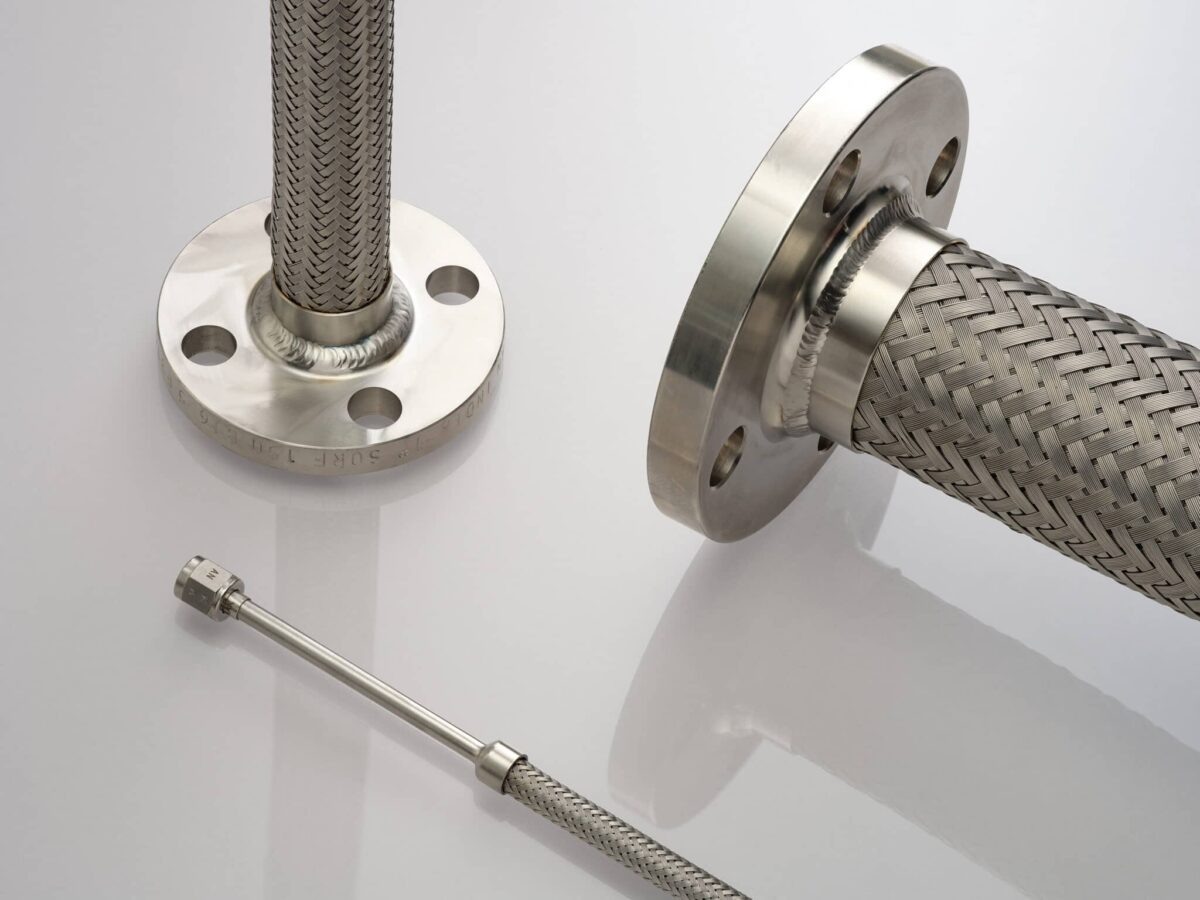
Performance Advantages of Metal Hose in Corrosive Applications
Water and wastewater treatment processes rely on a wide range of chemicals, including disinfectants such as chlorine and sodium hypochlorite, coagulants like ferric chloride and aluminum sulfate, and other additives used for pH control and nutrient removal. Increasing regulation around emerging contaminants, including PFAS (per- and polyfluoroalkyl substances), is also driving the adoption of new treatment methods and additional chemical processes. These chemicals can be corrosive to system components, particularly at connection points where exposure, vibration, and maintenance activities are most frequent.
Corrosion resistance is a key consideration in these systems. Stainless steel alloys, particularly the 300 series grades, provide strong resistance to many of the chemicals commonly used in water and wastewater treatment. By resisting chemical attack, metal hoses maintain their integrity over time, reducing the risk of premature failure and extending service life.
While non-metallic hoses, such as those made from PTFE, may be suitable for certain applications, they can present limitations in durability and long-term reliability. Polymer-based hoses are inherently permeable, allowing small amounts of media to diffuse through the hose wall over time. In treatment environments, this can result in gradual loss of process chemicals and potential exposure to surrounding equipment and personnel. Metal hoses, by contrast, are non-porous, preventing both the escape of conveyed media and the ingress of contaminants.
Material durability also impacts maintenance and replacement cycles. Unlike rubber and plastic hoses, which can degrade over time even when not in service, metal hoses are not subject to the same shelf-life limitations. This allows for longer storage periods and more predictable performance once installed.
How Penflex Supports Water and Wastewater Infrastructure Projects
Water and wastewater treatment systems require components that can withstand corrosive chemicals, continuous operation, and evolving regulatory requirements. Penflex designs and manufactures flexible metal hose to support reliable performance in treatment facilities, pump stations, and mechanical rooms.
Materials: Penflex offers a range of corrosion resistant alloys suited for the chemicals commonly used in water and wastewater treatment, including disinfectants, coagulants, and pH control agents. Standard offerings include 316L and 321 stainless steel, with additional alloys such as Inconel 625, Hastelloy C-276, and Monel 400 available for more aggressive environments.
For projects subject to domestic sourcing requirements, Penflex also offers hose and braid compliant with American Iron & Steel (AIS) provisions. These products are manufactured in the United States using stainless steel strip and wire melted and produced domestically. Defined part numbers and approved supplier lists to support traceability and documentation.
Corrosion resistance: Treatment processes expose components to chemicals that can degrade materials over time. Wall thickness is an important factor in how well a hose withstands these conditions. While thinner-walled hoses may be appropriate where flexibility is the priority, heavier-walled hoses provide a greater corrosion allowance and can extend service life in more aggressive environments.
Size range: From ¼” to 24”, Penflex’s flexible metal hoses come in a range of sizes that can be seamlessly integrated into any configuration or space.
Flexible and easy-to-bend: Thinner hose wall and increasing the number of corrugations per foot–called the pitch–are two of many design choices that result in enhanced bending characteristics.
Pressure ratings: When metal hoses are pressurized, the hose material naturally expands. The braid functions like a restraining cage, preventing the hose from elongating or swelling and enabling it to operate in pressurized systems. While many water and wastewater treatment applications are not considered high-pressure applications, pressure spikes may make pressure ratings a focus in certain scenarios.
Quality welds: High-quality welds are essential to hose integrity and long-term performance. At Penflex, we achieve this through a proven process that includes TIG welding and argon purging, which together produce clean, strong welds without compromising corrosion resistance. Our team includes ASME Section IX–certified welders, on-site certified welding instructors, and non-destructive examination (NDE) specialists, ensuring every assembly is tested and leak-tight before it leaves our facility.
Leak testing: While all hose assemblies are subject to our standard leak testing process, we do offer other, more acute leak testing methods. For instance, chlorine transfer hoses are tested to a maximum leak rate of 5 x 10⁻⁶ at two times MAWP using a helium mass spectrometer. (Due to permeability, PTFE hoses cannot be tested using helium mass spectrometry.)
Recommended Products for Treatment Facility Applications
P4 Series
General purpose industrial hose used for many chemical applications.
800 Series
Heavier wall thicknesses support a robust design well suited for more aggressive applications.
AIS Series
Intended for projects receiving government funding, AIS hose and braid is made in Gilbertsville, PA from domestically sourced materials.
Beyond the Product: The Penflex Partnership
At Penflex, we see every order as an opportunity to continue building our relationship with a current customer–or the beginning of a partnership with a new customer. Our customers count on us not only for a quality product, but also for expertise, responsive service, and resources to help them get the most out of their investment.
Dedicated Engineering Support
Our sales engineers work closely with you from project prototype through delivery, helping define requirements for new products and replacements. A dedicated account manager means you have a single point of contact who understands your business and responds quickly with thoughtful solutions.
Practical Technical Resources
From online calculators and engineering bulletins to in-person and virtual training, we give your team the tools to make informed decisions and the confidence to install, operate, and maintain hoses for maximum longevity.
Full Quality Documentation
Bureaucratic funding processes can be hard to navigate. On request, we provide complete record packs—including material test reports, leak and pressure test results, and cleaning procedure documentation—so you can meet compliance requirements and maintain full traceability.
Our commitment to service is reflected in our 99% customer retention rate and an average customer relationship of 20 years. We aim to make every interaction count, combining technical know-how with the kind of service that turns first-time buyers into long-time partners.
Footnotes
[1] Cybersecurity and Infrastructure Security Agency (CISA), Water and Wastewater Systems Sector, https://www.cisa.gov/topics/critical-infrastructure-security-and-resilience/critical-infrastructure-sectors/water-and-wastewater-sector.